Gyeongbokgung was founded in 1395, but its buildings are not all that old. The palace you visit combines nineteenth-century rebuilding with modern reconstruction. A useful first comparison is Geunjeongjeon, rebuilt in 1867, and the royal living quarters, reconstructed in 1995.
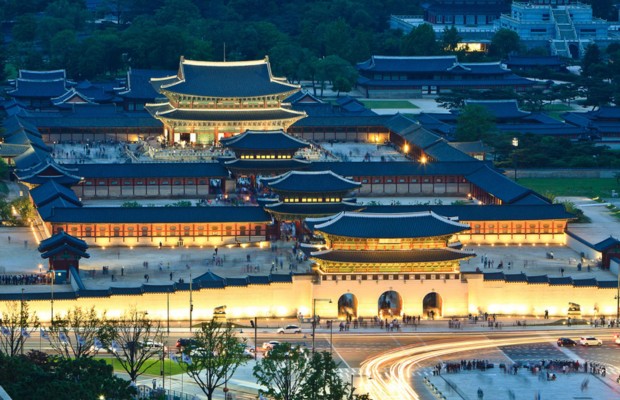
A palace name expressing a wish
Gyeongbokgung Palace (경복궁) — Search on Naver Map stands at 161 Sajik-ro, Jongno-gu, Seoul. It was the principal palace of the Joseon dynasty, founded in 1392. Its name expresses a wish that the new dynasty would enjoy great blessings and prosperity.
That founding story belongs to 1395. The age of the structures requires a different explanation: the palace burned during the Japanese invasion of 1592, and rebuilding was completed in 1867. Further destruction and removal of buildings occurred under Japanese colonial rule. A major modern restoration program began in 1990.
A quick guide to the buildings standing today
| Place | Date to remember | What that date means |
|---|---|---|
| Gyeongbokgung | 1395 | Foundation of the palace, not the age of every building |
| Geunjeongjeon | 1867 | Rebuilding of the surviving throne hall |
| Gangnyeongjeon and Gyotaejeon | 1995 | Modern reconstruction of the royal residential halls |
| Gwanghwamun | 2010 | Wooden reconstruction at its original location |
Reading the palace along its central axis
The central sequence runs from Gwanghwamun through Heungnyemun and Geunjeongmun to Geunjeongjeon, then through the working area around Sajeongjeon toward Gangnyeongjeon and Gyotaejeon. Following it helps distinguish the palace’s entrance, ceremonial, working and residential spaces.
1. Gwanghwamun: a historic gateway rebuilt in modern times
Gwanghwamun (광화문) is the palace’s main gate. Its history includes relocation in 1927, destruction during the Korean War and a concrete reconstruction in 1968. In 2010, it was reconstructed in wood at its original location.
From a permitted pedestrian area, look through the gate toward the succession of gateways inside. The repeated thresholds divide the approach into distinct spaces. The gate’s position helps explain the historic layout; its 2010 wooden reconstruction explains the age of the structure. “Original location” and “original building” describe different things.
2. Geunjeongjeon: a nineteenth-century throne hall
Geunjeongjeon (근정전), the main throne hall, dates to the 1867 rebuilding. It is therefore a surviving Joseon-period building, but not a surviving building from the palace’s foundation in 1395.
From the open courtyard, notice the hall raised above the approach. This was a setting for major state ceremonies, rather than the king’s everyday bedroom. Comparing the prominent hall and its broad forecourt with the residential spaces farther north makes that difference easier to understand. Terrace and interior access depend on current barriers.
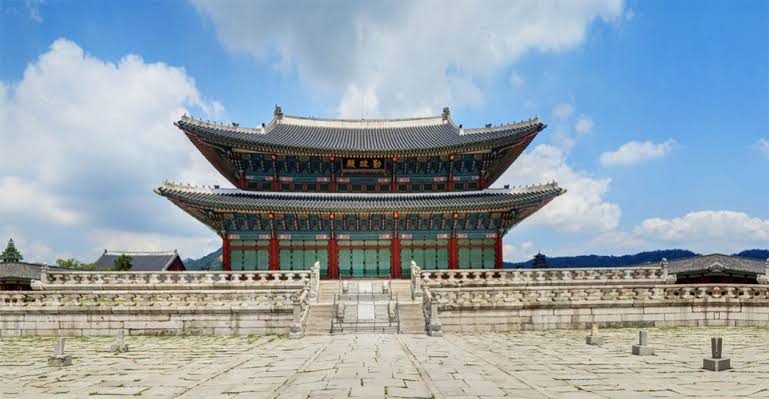
There is documentary evidence behind the date. The National Palace Museum of Korea catalogs an 1867 ridge-beam inscription from Geunjeongjeon. The writing was discovered beneath a roof beam during restoration in 2001. An 1867 building can undergo later repairs without becoming a modern reconstruction. That date does not mean every component has remained untouched since 1867.
3. Gangnyeongjeon and Gyotaejeon: restored royal living quarters
Behind the formal halls are Gangnyeongjeon (강녕전), associated with the king’s living quarters, and Gyotaejeon (교태전), the queen’s quarters. The official palace chronology records their modern restoration in 1995.
The earlier buildings were dismantled, with materials reused in rebuilding parts of Changdeokgung after its 1917 fire. The structures now at Gyeongbokgung help visitors understand the residential area again, but they should not be described as continuously surviving nineteenth-century halls.
Here, compare the halls and enclosing courtyards with the broad forecourt of Geunjeongjeon. The sequence moves from state ceremony toward the royal household. These reconstructed spaces help explain how the palace worked, even though the buildings are modern.
November 2026 visiting details
Checked November 2, 2026: the official notice provides free admission from October 29 through November 15, excluding closing days. November hours are 09:00–17:00, with last admission at 16:00. Tuesday remains the regular closing day, so November 3 is not a normal visiting day.
The official October–November visitor notice gives the applicable arrangements. These hours describe palace admission, not guaranteed access to every terrace or interior.
An optional chicken-soup meal nearby
Tosokchon Samgyetang (토속촌삼계탕) — Search on Naver Map, at 5 Jahamun-ro 5-gil, is an optional stop near Gyeongbokgung Station. Samgyetang is chicken soup with ingredients such as ginseng, jujube and glutinous rice. The Korea Tourism Organization describes nuts in this restaurant’s preparation; visitors with nut allergies should ask about ingredients before ordering.
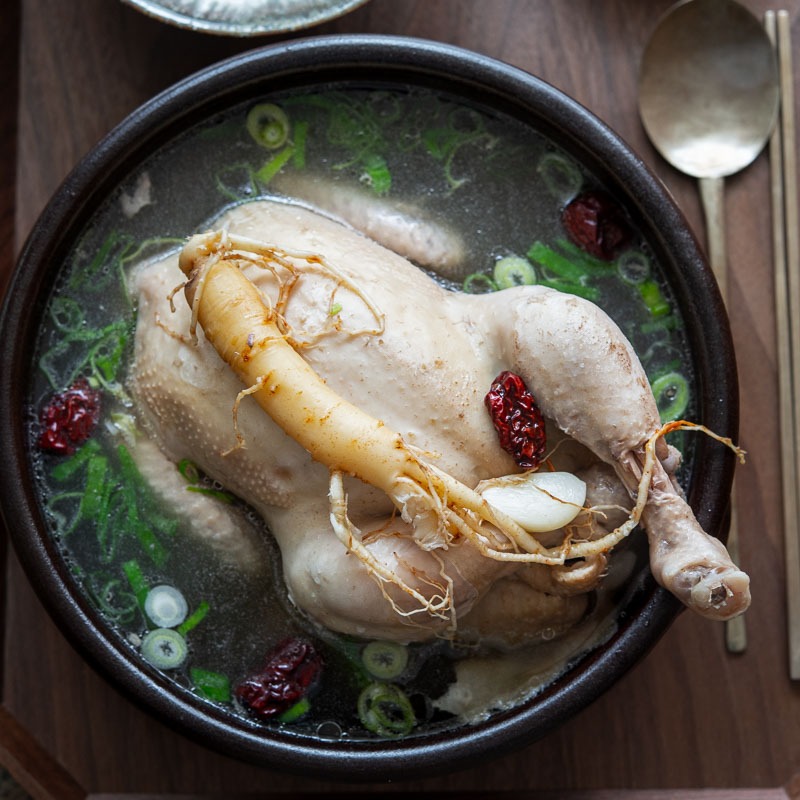
Published menu reference checked November 2, 2026: Polle lists regular Tosokchon Samgyetang at ₩20,000 and black-chicken samgyetang at ₩25,000. The price-update date and today’s counter prices were not independently confirmed. These are separate menu choices, and seafood pancake is an additional order.
The tourism listing gives hours of 10:00–22:00, last order at 21:00, and card acceptance. For a price or booking inquiry, its listed telephone number is +82-2-737-7444.
For a different royal building whose present form also developed over time, read Jongmyo’s Long Main Hall: Nineteen Chambers for Royal Ancestral Tablets. Its repeated shrine chambers explain a different architectural story from the palace’s rebuilt halls.
Sources and date checked
Checked November 2, 2026. Historical dates and interpretation draw on the Royal Palaces and Tombs Center’s Gyeongbokgung history and palace chronology, and the National Palace Museum’s 1867 Geunjeongjeon inscription record.
Restaurant information comes from VISITKOREA; the published menu reference comes from Polle. The restaurant’s posted menu takes precedence over online reference prices.
This article is based on published heritage and visitor information, not a personal visit. The links provided are non-affiliate links.
The images in this article were created using generative AI for illustrative purposes.
'Architecture & Art' 카테고리의 다른 글
| SL-002.Jongmyo’s Long Main Hall: Nineteen Chambers for Royal Ancestral Tablets (0) | 2026.10.31 |
|---|
